Free Images for everyone can be found here!!

Bloggers, you can use photographs from here for free, if your your blog is non-commercial. If a commercial website, the cost is nominal. All pictures on this blog are copyrighted to me. If an image is used, do attribute it as specified here! These photos are only for blogs/websites. If distributed, same conditions apply to end-user. Brick and mortar businesses have to pay (unless non-profit).Thanks.

The photos cannot be sold. For commercial purposes other than the web, pay as specified here. Select photos by using the SEARCH function under the Archives, found at the bottom of page (my email id is there too) or labels at bottom of each post. To see original image, click on image or ask me for a bigger and better one.


Showing posts with label Paintings. Show all posts

Thursday, March 12, 2015

Art Studio and an artist's tools

An artist's studio is a sanctuary! Somewhere where there is peace and quiet, and away from the hustle and bustle. A place to sit down and work with your easel and paints. A painter needs this as must as he/she needs fresh air.

art studio


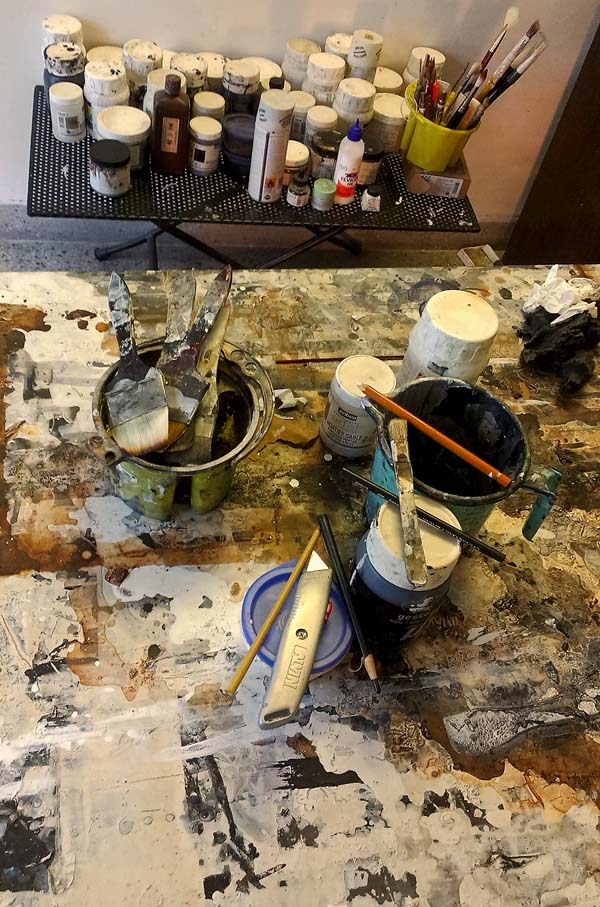
Tools of an artist. Paints, paint brushes of all hues and sizes, bottoles of colour.

Artist's tools


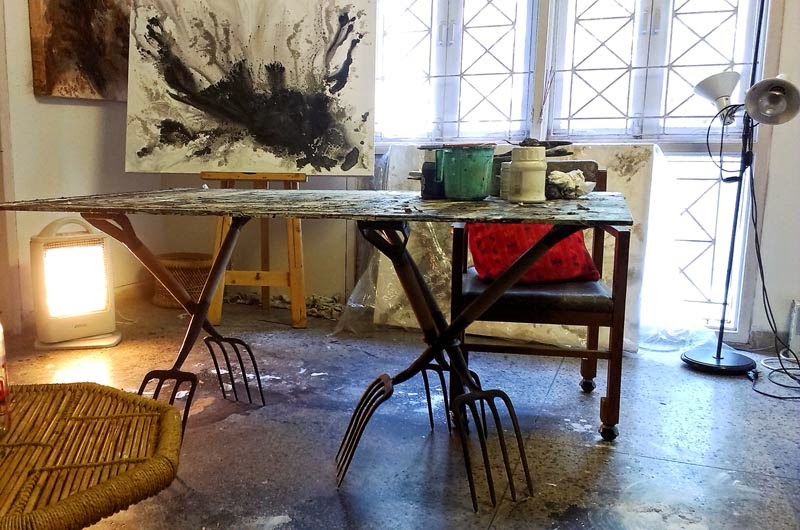
An artist's work table stained with paint.

Artist's work table

Check out all images filed under the label Art

Wednesday, August 22, 2012

Unique painting at the Louvre

This may not be one of the most famous paintings at the Louvre but it is something of a trick painting. As you pass it you will find the man in the red robe coming out of a doorway and waving in your direction. However as you pass this same painting something else happens which you will see in the next photograph. The painting seems to be about a war with the man waving to soldiers.

louvre painting of man in red robe waving


This is the same painting but after you have passed it. The man seems to have turned his face towards you! Interesting how the painter managed to do something clever like this! In the painting you can see more clearly the figures which are kneeling on the ground and in distress.

painting at the louvre in Paris, France

Related Images: The Louvre Museum Paris - exterior and interior with pieces of art
Sketches of Venus de Milo at the Louvre in Paris or Venus de Milo at the Louvre in Paris or Painter at the Louvre, Paris

You might also like Statues and sculptures of women at the Sistine Chapel or Male sculptures in Vatican city museum or Chinese Emperor's Crowns

Or check out all the images in the Sistine Chapel including that of exterior architecture and other types of art.

Wednesday, July 11, 2012

Sistine Chapel Corridor Ceiling Paintings and Designs

The Sistine Chapel's (where the Pope resides), is famous for its architecture and sculpted decorations and paintings. Renaissance artists including Michelangelo, Sandro Botticelli, Pietro Perugino, Pinturicchio worked on the paintings and frescoes in the chapel and the results as you can see in these pictures, are spectacular.

The golden ceiling fresco at the Sistine Chapel. This painted architecture as visible in these pictures is full of religious symbols like the acorn, fish, and falcons.
golden celing design at the sistine chapel


Not just gold, but also red and blue are used extensively in these remarkable art works. All the paintings have elaborately decorated borders. The paintings here contain figures of angels alongwith various other symbols used to convey some meaning.
 elaborately decorated fresco ceiling panel at the sistine chapel

Another photograph of the paintings lining the celing at the Sistine Chapel in Rome. The painted architecture not only comprises of various symbols depicting Christianity and the story of Jesus Christ, but also pictures of angels, trumpets and other figures.
painted architecture at the sistine chapel in Rome

At the end of the magnificent corridor you can see a sculpture of two figures standing alongside the symbol of of what looks like a small dragon. These paintings are a showcase of the reproduction of the anatomy and the contours of the human form.
 painted architecture at end of corridor at the sistine chapel

These pale and pastel raised paintings or designs on the ceiling also appear to depict some story from the bible. There is no doubt that all this work is telling a story and is mean to be interpreted and read.
pastel artwork at the sistine chapel in rome

All the artwork on the walls or ceilings of the Sistine chapel show some aspect of the story of Jesus Christ and Moses.

decorated fresco at the sistine chapel


Related Images: More Sistine Chapel Ceiling Designs or the exteriors of the Sistine Chapel in the Vatican City in Rome Italy or check all the photographs filed under Rome"


Wednesday, July 4, 2012

Sistine Chapel Ceiling designs

The Sistine Chapel is where the Pope lives, the head of the Catholic Church. It lies in the Vatican City. It's painted architecture and sculpted decorations, frescoes and paintings are famous throughout the world. Renaissance artists like Michelangelo, Sandro Botticelli, Pietro Perugino, Pinturicchio worked on the paintings and frescoes in the chapel, creating great works of art.

This is an image of the spectacular ceiling of one of the corridors inside the church. Most of these paintings depict the life of Jesus Christ and Moses and are meant to be interpreted and read.  Symbolism was used freely.
corridor ceiling art inside the vatican city church

Another equally breathtaking painting on the ceiling of the church surrounded by gold engravings. Angels and other figures from the bible were used freely in the artwork and frescoes on the ceiling.
painted ceiling of renaissance art in Rome

A circular painting up inside an arch at the Roman Church. This painting shows some sort of war or battle going on. Some of the figures (angels?) are shown killing animals and also humans.
circular painting on the ceiling of the sistine chapel

Another circular piece of renaissance art. Angles with wings and halos can be seen in the blue and gold painting.
circular painting on the ceiling of the sistine chapel in rome

Related Images: More Sistine Chapel Corridor Ceiling Paintings and Designs or   Sistine Chapel in the Vatican City in Rome Italy
For more pictures from Italy and Rome:  City of Roma - Pictures or  Photographs of the Colosseum at Rome, Italy or Trevi Fountain (Fontana di Trevi) in Rome or the Rome castle or Castel Sant'Angelo - photographs and sketch or try any of the labels below this post.


Thursday, December 22, 2011

Truck Art and Truck Painting

These are photographs of paintings on trucks or truck art. Prettying up trucks and vehicles is very popular in the Indian sub-continent and these are photographs from India. Gods and goddesses are frequently used as motifs as well as plants and flowers. Truckers believe that religious symbols ward off evil and protect them from accidents.

This is a bank of a painted truck. These are paintings of women with pots on their heads and cows grazing in the background of hills, a lake and trees.
painted scene on back of truck in India

This is a close up of a brightly painted orange truck with motifs of goddesses and the lotus flower. At the front of the truck against a red background there is a small pot with a coconut inside it and this is a religious symbol.
brightly painted truck with religous motifs

That same truck has a picture of the Taj Mahal painted on the front of the truck.
taj mahal painted in front of truck

The eye of the truck!

The peacock is the Indian national bird and therefore this is a popular motif used for truck painting. The lotus is also seen in the centre of the two peacocks. The lotus has a religious significance in India.
peacock painting on back of truck

At the back of this tempo there are paintings which are entirely religious...the  swastika with the pooja pot with sacred leaves and coconut as well as the pink lotus flowers on each side.
religious painting on back of truck

Related photos: Swastika graphics from India or or Graffiti in Rome and Athens or try the labels below this post.


Friday, September 2, 2011

Ravana photograph and sketch

Rāvana or Ravan or रावण was a king in the ancient country of Lanka according to legend and the villain in the holy epic of Ramayana. He is depicted as a demon with ten heads. These are photographs of Ravan from a mural or  painting I saw in the village of Dakshinachitra, a heritage village near Chennai. This is a genuine ancient piece of art which was hung in frame with a gray background. I have reproduced the beautiful painting here but changed the background to white to make the figure of Ravan to stand out  better.

Certain parts of the painting have been damaged as it's old, but even then it looks like colourful and spectacular. There was no artist's name on the painting which confirms that this painting must be at least a hundred years old.


Ravana Painting

While toying with photoshop I altered the original painting a little to give it a dark look.
ravana depiction


This is a sketch or drawing of Ravan or Ravana, based on the painting above.
ravana sketch

Related Pictures: Indian cities lit up at night with Diwali lights or Dassera or Dasara flowers
For religious symbols from Hinduism: Swastika graphics from India or Paduka or Guru's feet or or Shiva Pindi or Lingam
For images of Ganesh Idols lit up with decorative electric and psychedelic lights see this post: Ganpati at Night or try this one: Ganesh Pandal decorations on the streets  or Ganpati or Ganesh sketches


Friday, December 31, 2010

Tinga Tinga painting from Dar-es-Salaam Tanzania

This is a photograph of a Tingatinga painting I picked up on the streets of Dar-es-Salaam, Tanzania. As Dar is the place where this style of painting orginated, I am sure it is genuine Tingatinga even it is in a way street art and a simple one.

large tingatinga painting


The Tingatinga painting style is named after Edward S. Tingatinga, a Tanzanian. He established this form of art in the sixties. Technically, Tingatinga art is painting on masonite using bicycle paint in bright colours, and traditionally these are supposed to be very large paintings. Nowadays this doesn't hold true, with a lot of miniatures available. The one published here is a fairly large painting around four-five feet in height.

The motifs, patterns and designs are based on East African Swahili culture. This art has influenced modern African art.


Sunday, December 26, 2010

Ajanta Temple Paintings and Murals from Cave 2

These are photographs of murals and paintings from Cave No. 2 of the Rock Caves of Ajanta, near Aurangabad, which are fairly well preserved. The style of Art is called Ajanta. Ajanta Art comprises of different styles from different periods of time, from the 2nd century BC to the 5th century AD. These paintings influenced Art in India for many centuries.

Decorative themes using both animals, plants and humans have been used.

The first image is of art on the ceiling at the entrance to the Cave. Engravings can be seen on the doorway.

ceiling mural ajanta


The depiction of Buddha is visible on the top of the doorway.
Ajanta Art on the doorway

Considering that in ancient times there were not paint brushes as such, and artists used just twigs and animal hair, or painted by hand, the results are quite brilliant!
Ajanta cave paintings


These last two pictures are a glimpse of a wall mural inside the cave. It was quite dark inside and a dim light was shining on the beautiful canvas on the wall.
Ajanta paintings inside cave

Ajanta mural inside cave


This is a painted pillar from the cave. Sculptured decoration at the top and bottom of the pillar are also visible. Remnants of blue paint can be seen on the flower design.
painted pillar ajanta

This last painting was lying in the office where restoration work was going on. Am not sure where it came from or whether it is original Ajanta or just a copy.
ajanta style painting

More images of Buddha: Golden Buddha Statue or photos of Buddha statues, frescoes and sculptures at Ajanta Caves or photos of Paintings and Murals from Cave 1 of Ajanta
For pencil drawings of Buddha: Sketches and drawings of Buddha or simply click on the label Ajanta.


For images from Ellora try these posts: Kailashnath Temple at Ellora or Ellora Temples sculpted exteriors or or simply click on the label Ellora.


Sunday, December 19, 2010

Warli Paintings Photographs

These are photos of folk paintings of the Warli tribe, a tribe from north west of Mumbai. (A link to sketches and designs of Warli Art is given at the bottom of this post). Warli Art was first discovered in the early seventies. Its roots can be traced to the 10th century AD. Wall Murals of these paintings look beautiful. It is believed by historians that the Warli tradition of art is as old as 3,000 BC.

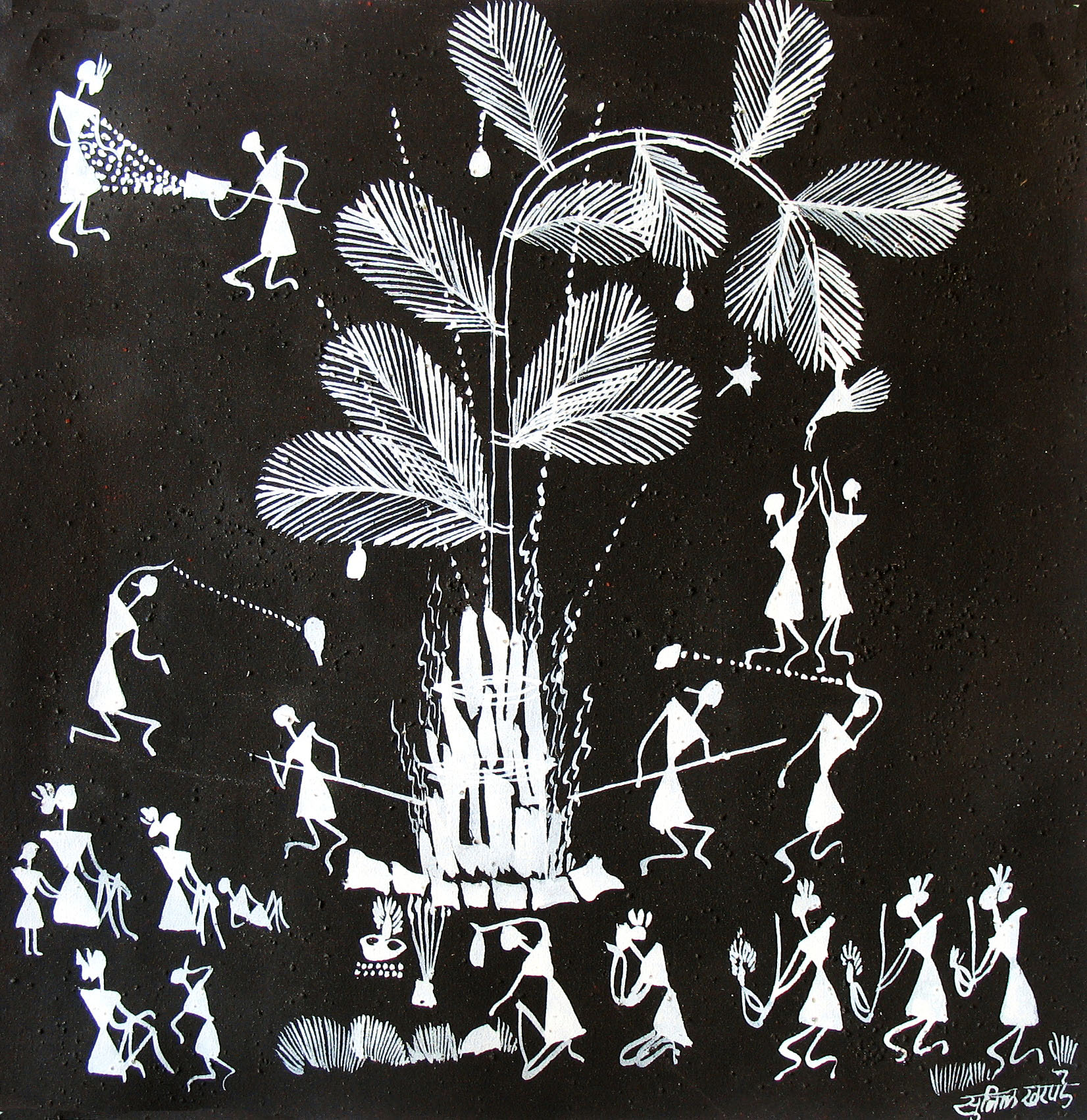
Warli paintings represent the daily life and events of the Warli tribe of Maharashtra. These unique representations use a mud base and mainly one color – usually white, with perhaps dots of red and yellow. This white colour is of natural origin, made from ground rice. Traditionally, these paintings do not use straight lines and instead the lines are made by using dots and dashes. They use triangles, squares and circles though. The limbs of the figures are always flowing, graceful and curved. The curved lines of the limbs are an important feature of warli art.

The first picture has a red natural base with the white rice paints to make the drawings. Many of these paintings and art style depict dances of the tribes. The dancers hold one another around their waists move around the musician.

warli painting red background


This is a black mud base and white rice paints used for the drawings. These paintings use a circle, a triangle and a square. The circle represents the sun and the moon, the triangle mountains and trees. The square seems to represent a “sacred enclosure” or a piece of land. Human and animal bodies are represented by two triangles joined at the tip – the upper triangle depicts the trunk and the lower triangle the pelvis. Their precarious equilibrium “symbolizes the balance of the universe, and of the couple.”

warli painting black background

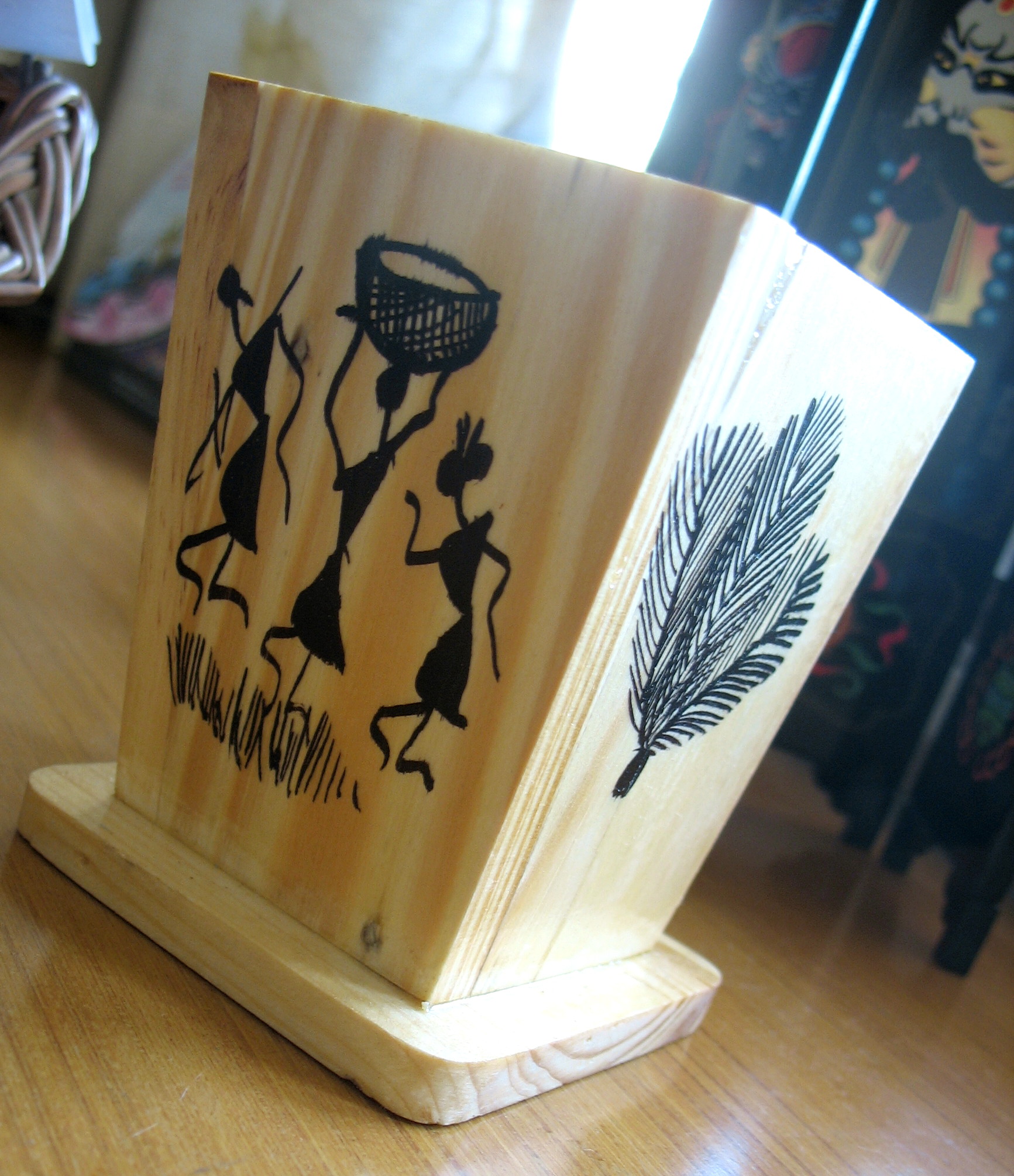
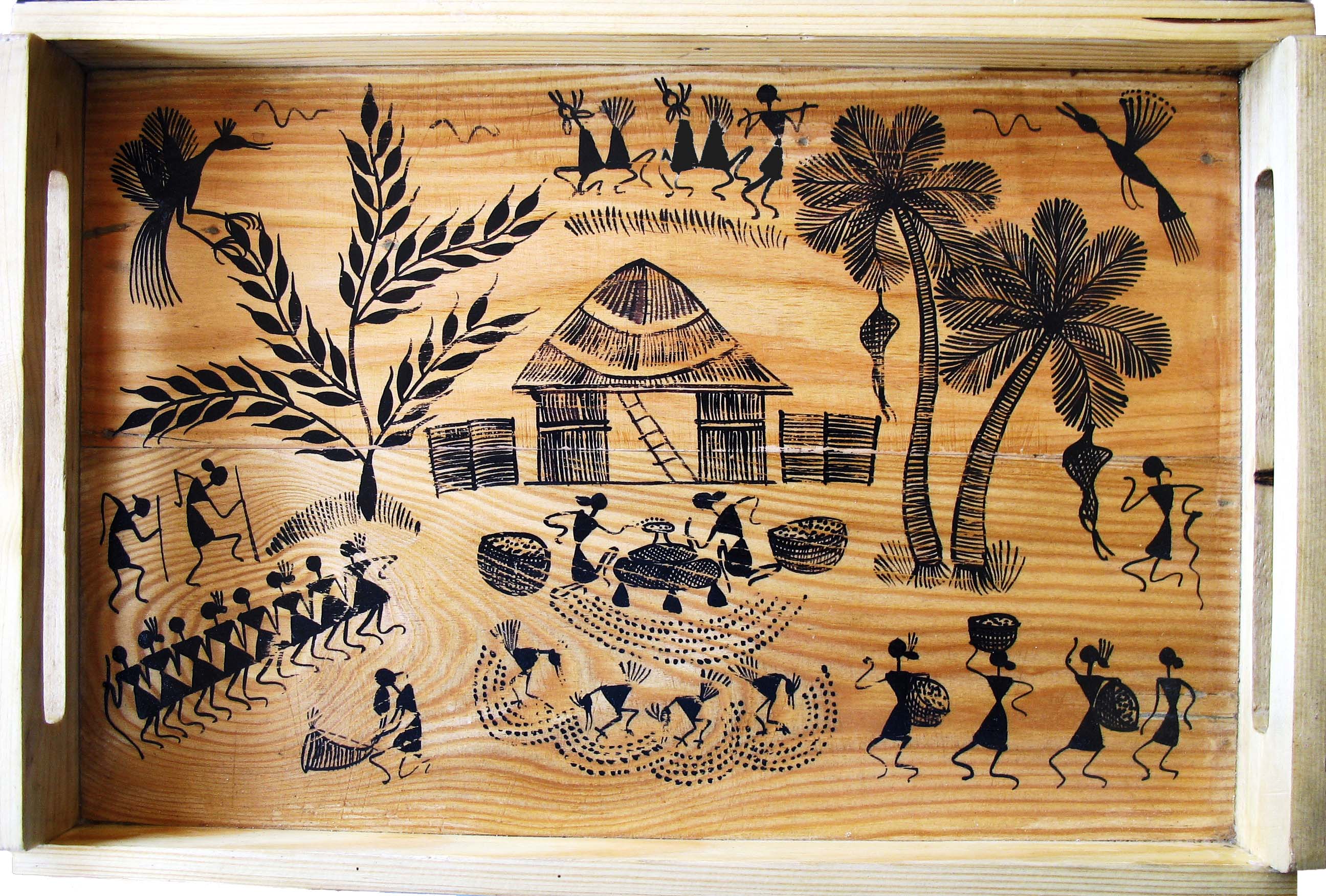
This art is now used for commercial purposes and paper is used for the paintings. Various items like trays, pen stands and coasters decorated with this style of painting are available in the market.

Here is a box of wooden coasters with Warli drawings on them.

wooden coasters with warli drawings


This is a picture of a wooden pen-stand with Warli drawings.

wooden pen-stand with warli drawings


This is a pretty wooden tray with village life depicted in the warli drawings. Activities like dancing and community living are portrayed here.

wooden tray warli painting
(These paintings and objects were purchased by me from the Warli people)

Related Images: Warli Art - Sketches and Drawings or Truck Art and Truck Painting or The Tarpa Wind Instrument of Indian Tribes or Indian Artisans making small statues
Or Tinga Tinga painting from Dar-es-Salaam Tanzania and Unique painting at the Louvre


Wednesday, December 15, 2010

Paintings and Murals from Cave 1 of Ajanta

These are photographs of murals and paintings from Cave No. 1 of the Rock Caves of Ajanta, near Aurangabad. Many modern designs, drawings and patterns are based on this ancient work, and the style is called Ajanta Art. Ajanta Art comprises of different styles from different periods of time, from the 2nd century BC to the 5th century AD. These paintings influenced Art in India for many centuries.

There are 31 caves cut out of rock, dating back to the second century BC. Cave 1 depicts scenes from the life of Buddha. There are sculptures and frescoes as well as paintings, but in this post I am showing mostly pictures of the ornate ceiling and wall murals.

These pictures are from Cave 1. Paintings from Cave 2 and also sculptures are in other posts, links to which are below this post.

This spot is a World Heritage site.

Ajanta wall and roof painting


These paintings are Buddhist in origin and narrate tales from the life of the Buddha and his teachings. They are found on the walls and on the ceiling of the caves. Naturally,  colors have faded and tourists are not allowed to use the flash. The lighting is also dim, to preserve the colours. Getting sharp photos were almost impossible with the camera I had, a Canon digital.


Ajanta wall painting

The bluish green is not a colour cast, but the actual light in the caves, and it has something to do with preserving the paintings. One can only imagine how breathtaking these caves must have been before they vanished from all human contact for hundreds of years.
Ajanta ceiling painting


Ajanta ceiling painting

Ajanta ceiling painting

Ajanta ceiling painting


The light in these caves is very dim, and the ancient ones had no electricity. How did they draw such intricate paintings on the walls and ceilings of the rock caves? Well, they found an ingenious way out. There are long narrow water canals on the floor of the caves, and these enhanced the limited light.
Close-up Ajanta wall painting

Ajanta ceiling painting

Close-up Buddha painting Ajanta wall

Ajanta porch painting and frescoes

Ajanta wall painting


Ajanta ceiling painting


These caves were tucked away deep in the jungle and that is why Mughal invaders did not find them. They remained, and are a feast for our eyes today. More information on this cave is given here.

For more images of Buddha try this post: Golden Buddha Statue  and for pencil drawings of Buddha: Sketches and drawings of Buddha

Other related images: Ajanta Temple Paintings and Murals from Cave 2 or check out the sculpted art of Ajanta here: Buddha statues, frescoes and sculptures at Ajanta Caves or simply click on the label Ajanta.

For images from Ellora try these posts: Kailashnath Temple at Ellora or Ellora Temples sculpted exteriors or simply click on the label Ellora.


Tuesday, December 14, 2010

Mona Lisa Painting

This is a photograph of the painting of Mona Lisa by Leonardo da Vinci which is at present at the Louvre. They did not allow us to use the flash and it was difficult to get clarity with the digital camera I had.

Mona Lisa at the Louvre

Related Images: Venus de Milo at the Louvre in Paris
For other forms of paintings try the African Tinga Tinga painting from Dar-es-Salaam Tanzania
or Indian Tribal Art: Warli Paintings Photographs