Free Images for everyone can be found here!!

Bloggers, you can use photographs from here for free, if your your blog is non-commercial. If a commercial website, the cost is nominal. All pictures on this blog are copyrighted to me. If an image is used, do attribute it as specified here! These photos are only for blogs/websites. If distributed, same conditions apply to end-user. Brick and mortar businesses have to pay (unless non-profit).Thanks.

The photos cannot be sold. For commercial purposes other than the web, pay as specified here. Select photos by using the SEARCH function under the Archives, found at the bottom of page (my email id is there too) or labels at bottom of each post. To see original image, click on image or ask me for a bigger and better one.


Showing posts with label Culture. Show all posts

Tuesday, February 16, 2021

Akluj Fort

Akluj Fort is just over a hundred km from Solapur in Maharashtra. This fort is several hundred years old but has been well restored which is not that common in India. Another name of the fort is Shivshrushti, a new name. Several important historical figures have lived at this fort and prisoners too.  


The main gate has been re-built, thus created during the renovation project.


Inside the fort:-


The lawns are well maintained.


There is also a museum which has models of different forts of India as well as frescoes depicting scenes from the period.

If you are in the vicinity, this is worth a visit. You can improve on your historical knowledge and at Rs 20/- a ticket it's almost free.

Friday, April 10, 2015

Bridegroom on horse

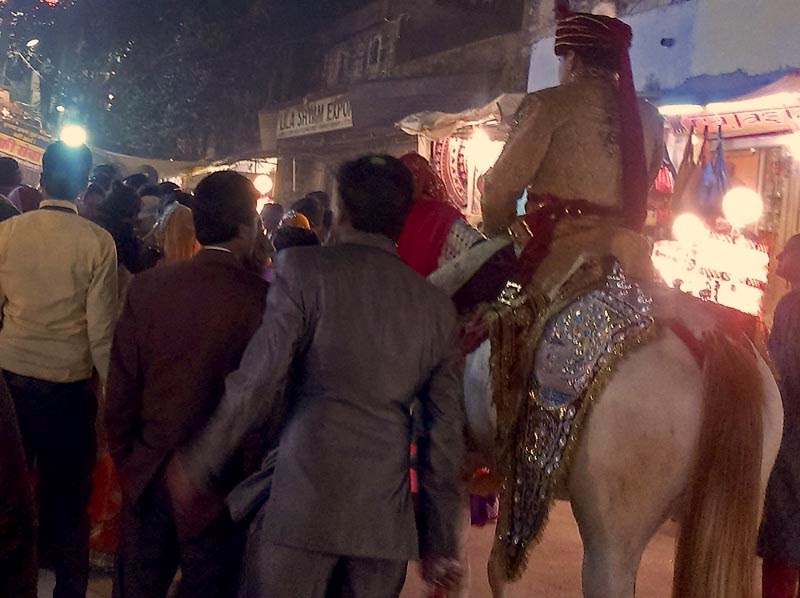
These are a few photographs taken in Pushkar, Rajasthan, of a bridegroom atop a horse, in a baraat. It is a traditional custom in North India for the bridegroom to travel on a horse to reach the house of the bride. Family and friends accompany the bridegroom in a procession which often includes a live band. Dancing and singing in the streets during the wedding procession is the traditional way. Fireworks are common.

The procession takes place in the evening. It's a crowded street and the procession blocks the road.

wedding procession


The baraat making its way through a crowded market.

Bridegroom on a horse


A closer look at the bridegroom in his splendour

Bridegroom

You might also like Palanquin or Doli, which has a Rajasthani bride traveling to the wedding venue.
Another post about Rajasthanis: Old Rajasthani lady.
Or check out any of the labels below this post.


Thursday, May 22, 2014

Gateway of India view from the sea

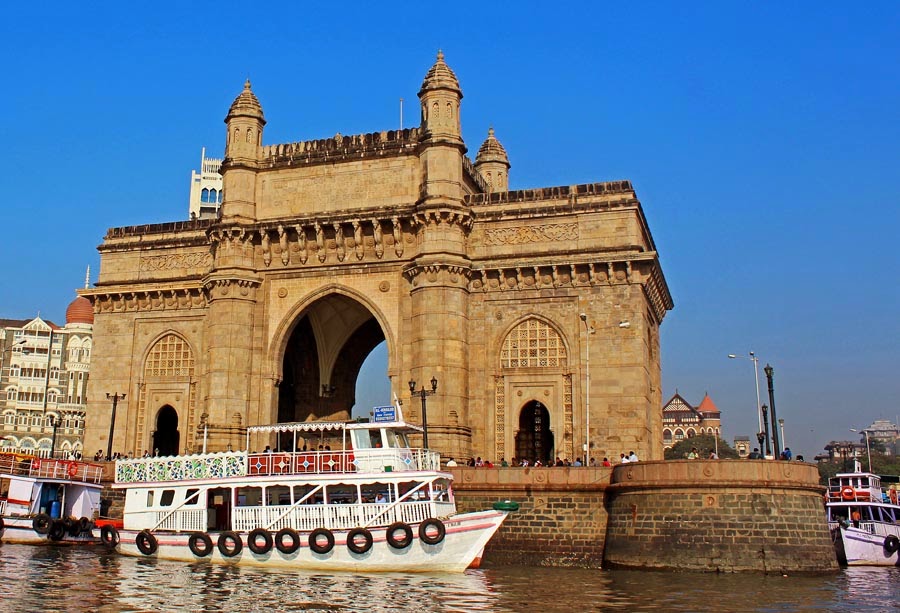
The Gateway of India is a monument built by the British Raj in Mumbai, Maharashtra, India. It is right opposite the Taj Mahal Hotel, and on the waterfront of the Arabian Sea in South Mumbai. It is built like an arch, and is 26 metres high.

The Gateway was built erected to "commemorate the landing of their Majesties King George V and Queen Mary at Apollo Bunder when they visited India in 1911" It is built in the Indo-Saracenic style. The monument was completed in 1924.

Here is a view of the Gateway of India taken from a boat. It's the view from the sea.

Gateway of India


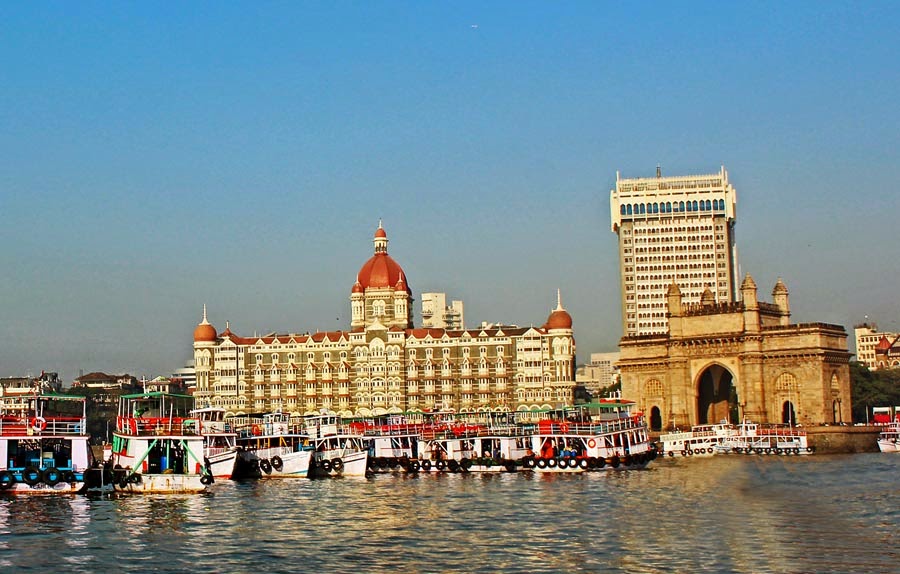
A view of the Gateway of India from a little further down the sea. In this shot you can see the Taj Mahal Hotel as well which in fact dwarfs the Gateway of India. A row of tourist boats lined up in the area.

Gateway of India and the Taj Mahal Hotel

You might also like The Taj Mahal Hotel in Mumbai or Flora Fountain in Mumbai or Mumbai Muncipality Heritage Building
Or Mumbai aerial view - pictures on the way out of Mumbai or Mumbai Skylines - Worli or Mumbai Skylines - Nariman Point and Malabar Hill or Marine Drive Mumbai - Photographs and Sketches
Or Fashion Street in South Mumbai or Bandra Promenade


Monday, May 12, 2014

Krishna Temple in Mahabaleshwar

These are photographs of the Krishna Temple or Krishnabai temple in Old Mahabaleshwar. It is more than 7 centuries old, and was built by King Singhan of Deogiri. He built it at the source of the Krishna river. The temple is ancient and partly in ruins but it is well maintained. It overlooks a steep cliff from where one can get a lovely view. Amazing that despite being exposed to high winds and rain it still maintains its original shape.

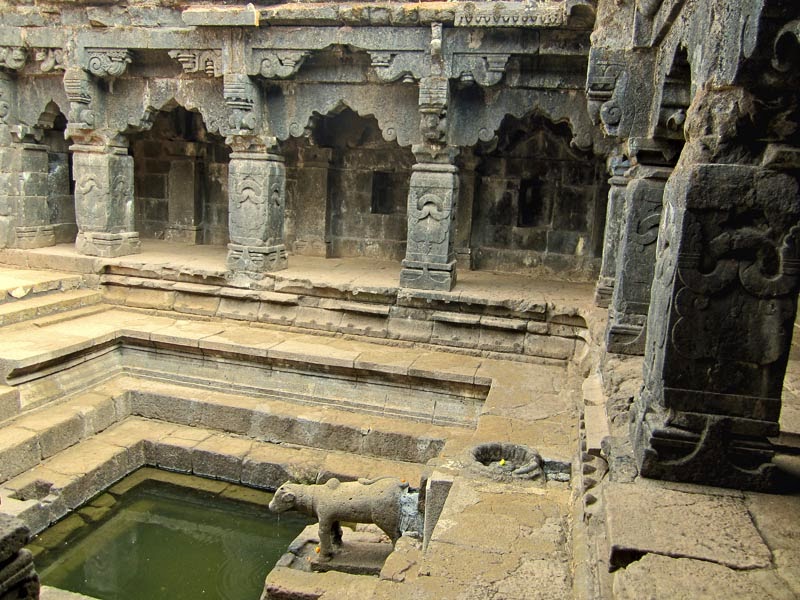
Krishna Temple


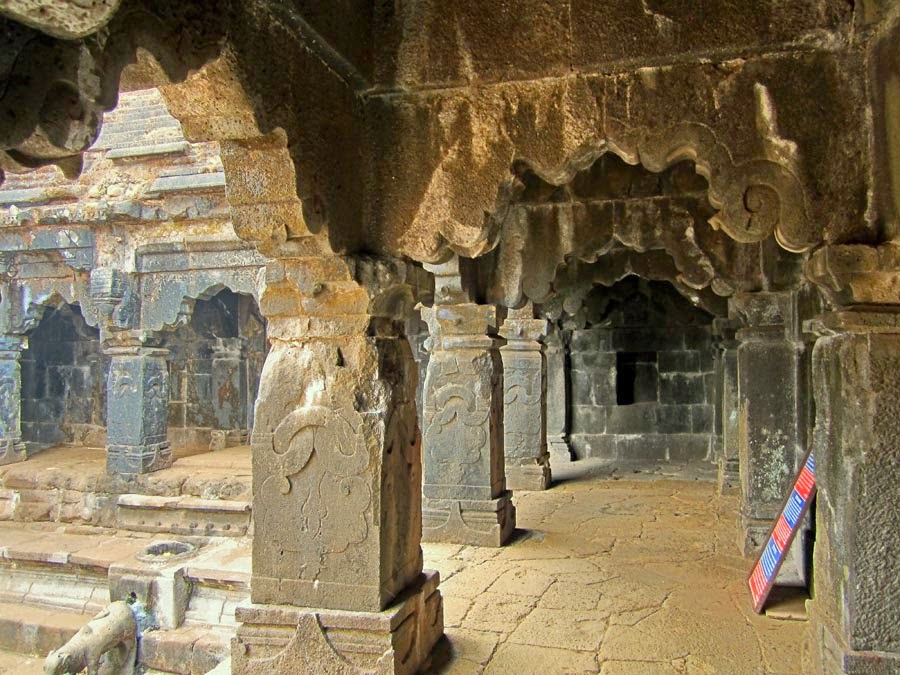
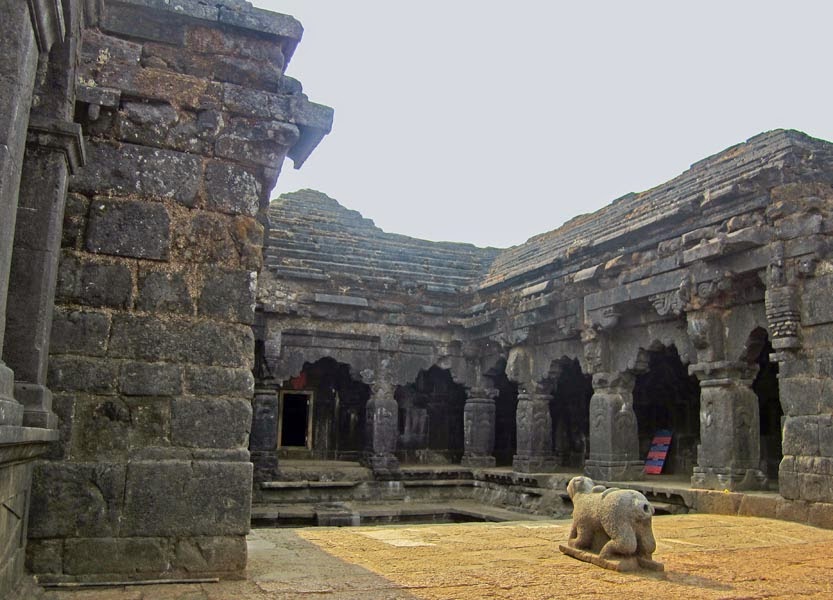
There is a small pond in the courtyard of this ancient temple into which the waters of the Krishna river fall (from the mount of the Nandi). In this photographs you can see the carved stone pillars. Every part of this temple is beautifully carved.

Krishnabai Temple


The Nandi at the entrance to the temple

Krishna Temple with Nandi


Another view of the temple's  open corridors and the carved pillars. The ceilings are also carved and these will be shown in another post.

Krishna temple open corridors

Check out a birds eye view of the Krishna temple  or Krishna Temple Ceiling Art
Or you might also like Somnath Temple photographs or Group of temples at Mahabalipuram or Mammallapuram or Shore Temple at Mahabalipuram or Mammallapuram or Meenakshi Temple or Tiru-alavai images

Or check out all the carvings, sculptures and paintings at Ajanta or Ellora, where you will find photographs of both the Ajanta and Ellora caves and the art.

Or see the scores of images filed under the label "Temples" where you will find temples from different parts of the world, as well as sketches and silhouettes.

Thursday, May 1, 2014

Krishna Temple

The Krishna Temple or Krishnabai temple in Mahabaleshwar (Maharashtra) was built in the 13th century by King Singhan of Deogiri at the source of the Krishna river. It is located in Old Mahabaleshwar. The temple is ancient and partly in ruins but it is well maintained. It is a short walk (a rough road) into the jungle from the Panchganga temple. It is situated at the edge of a cliff and there is a breathtaking view. However it being exposed thus to the natural elements has meant that erosion has eaten away the temple to some extent.

There are more beautiful sculptures and art inside the temple - Krishna Temple of Mahabaleshwar.

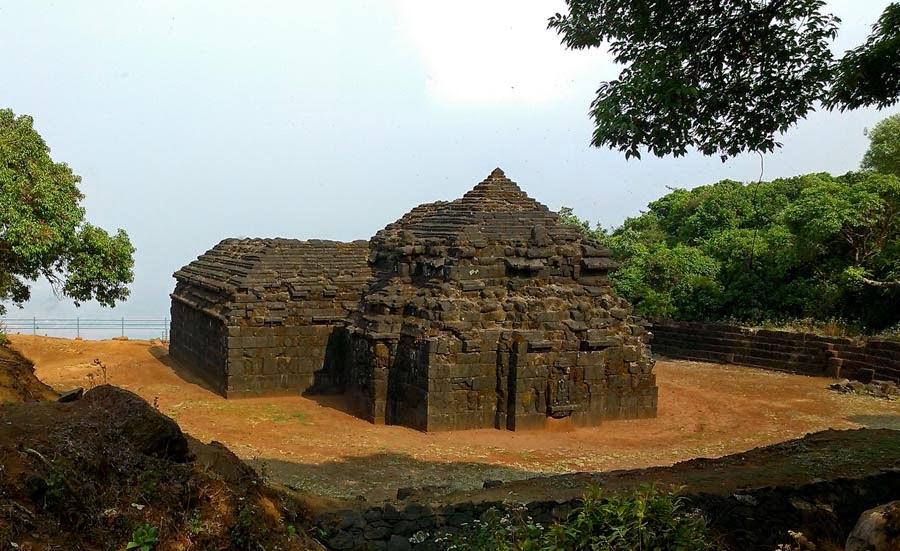
Krishnabai Temple birds eye view


This is an image of the temple from the other side of the temple, the entrance. It is built in a horse shoe shape with a small pond (where the Krishna river water flows out) in the courtyard.

Krishna Temple in Mahabaleshwar


This is a closer look. The corridors on the side have carved pillars and the ceilings are also carved. Photographs are not allowed in the inner sanctum which is always wet. The water seeps through the ground. It is the source of the Krishna river.

Inside of the Krishnabai temple in Mahabaleshwar


As it was in the hot season the water which comes out of the mouth of the nandi is just a trickle. But this is the source of the Krishna river.

Pond inside Krishnabai temple

More pictures of the Krishna Temple in Mahabaleshwar or Krishna Temple Ceiling Art
You might also like Somnath Temple photographs or Group of temples at Mahabalipuram or Mammallapuram or Shore Temple at Mahabalipuram or Mammallapuram or Meenakshi Temple or Tiru-alavai images

Or check out all the carvings, sculptures and paintings at Ajanta or Ellora, where you will find photographs of both the Ajanta and Ellora caves and the art.

Or see the scores of images filed under the label "Temples" where you will find temples from different parts of the world, as well as sketches and silhouettes.

Monday, March 31, 2014

Significance of Animals and other life in Hinduism

Even if one is not a religious Hindu, one cannot help revering the religion for one thing - it's understanding, love, and respect for animals. Animals have a right to be here, just as humans do, and no religion understands this better than Hinduism.Animal, mammal and even reptile imagery is common in Hinduism. Indian literature is also full of references to animals. And the references do not paint the creatures as evil.
The fables of West has few references to animals, and some paint the animals negatively. For example, the evil wolf in Red Riding Hood. On the other hand in Indian fables such as in the Panchatantra, The stories are full of animal characters and morals for humans and many of these stories date back to the  2nd or 3rd century BC.
And then, we have our Hindu Gods who are often depicted complete with their favourite animals, whether cows, elephants snakes or even rats! Used either as pets or vehicles. This made animals sacred for many centuries and helped preserve our wildlife although now the influences of the West has changed us to some extent.

Animals were always a part and parcel of our culture, and I am very proud of it. The Gods showed us the way.

Strangely westerners ridicule our "worship" of animals and even have contempt for it. They have ofcourse killed off most of their wildlife! They have little or not understanding of the importance of animals in Hinduism and even less about the right of a form of life to live, a right others have as much as humans. All their recent efforts to preserve animals are esoteric in nature, without a base in spiritualism. It's good ofcourse, a way for them to make up for the many centuries of animal slaughter.

Krishna loved milk and milk products and this is him with a pet cow.


Nandi, the Bull, is Lord Shiva's ride and found outside many temples.


Here is Shiva with his Nandi bail and also a snake around his neck. There are various interpretation of why there is a snake around the neck. The interpretation  is that "a snake hoards nothing, carries nothing, builds nothing, lives on air alone for a long time, and lives in mountains and forests. The venom of a snake, therefore, symbolizes the yogic power".


This is at the pre-historic site of the Kailashnath Temple at Ellora. This temple has several sculptures of lions and elephants. In Hinduism animals are considered on par with humans, not inferiors and that is why they have a place with God.


Turtles are often found in temples, at the feet of the Gods. In Hinduism, a tortoise is one who carries the world on his back, upholding the Earth and the sea. Turtles are revered in some other ancient cultures as well.

Read more about the importance of animals in Hinduism here.


You might also like or Krishna Temple in Mahabaleshwar or Diya graphics and illustrations and Sketch or other Hindu Religious symbols or check out all the photographs filed under Hinduism, Ellora, Art, Culture or Religion or Temples
The Image of different Religions is well illustrated in this post by taking random first images off the internet.

Friday, March 28, 2014

Hindu Religious symbols


There are many things which are held sacred by the Hindus and these symbols are usually either found near the dieties or used in religious rituals.


This is an image of a copper vessel and a coconut standing in it. Used as an offering to the Gods. The Swastika, an ancient Hindu symbol is also seen in the image.

Hindu religious symbol


Each arm of the Swastika as per archaeological evidence represents "the processional equinox and solstice around the pole start". Other old civilizations around the world like Turkic, Iranian, Armenian, Nepalese, Chinese, Japanese, Korean and European have also been associated with this symbol. It is still commonly used in Hinduism, Buddhism, and Jainism. It signifies wealth, prosperity and auspiciousness.


Indian swastika


Flowers are commonly used for worship in all religions but Hinduism favours certain flowers. The 
The Chapha or Plumeria in English is used frequently for the worship of Hindu Gods. Here it is seen decorating a Trishul, another sacred Hindu symbol. 

chapha flower on trident


The Trishula considered a sacred symbol for Buddhists as well as Hindus. The Hindu God Shiva uses this three pronged weapon as seen here in this picture. So does the Goddess Durga and also some other Hindu dieties.  The three points of the Trishul are supposed to represent the trinities of  creation, maintenance and destruction - The Past, the Present and the Future.
In the human body, the trishula is also meant to signify the place where the three main nadis, or energy channels (ida, pingala and shushmana) meet at the brow. 

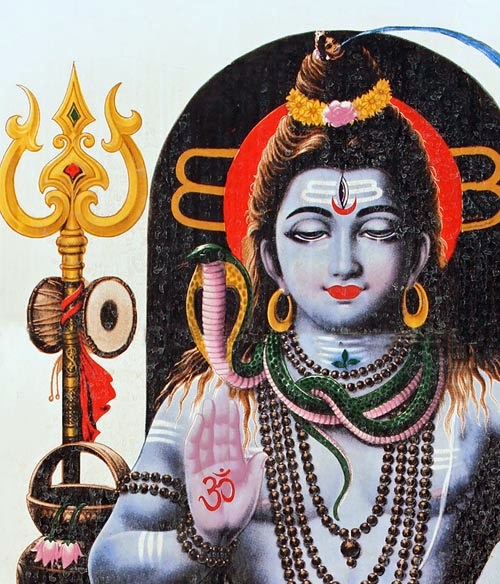
And don't miss the Om symbol on Lord Shiva's palm. Written as ॐ in Devanagari, the Om is a type of mantra and mystical Sanskrit sound of Hindu origin. It is used for chanting during Yogic exercises. It is important in various religions such as Hinduism, Buddhism, Sanatana Dharma and Jainism. 

Lord Shankar with Trident and Om symbol


Orange Marigold flowers are usually used in religious rituals and have now taken on a religious tone. They are hung in doorways and used in puja or Hindu religious rituals not just on festivals, but on any auspicious occasion.

home decorated with yellow flower garland


A small temple in Thailand where orange marigold flowers are used for worship. Incense is also seen here. Again frequently used for the worship of God in most religions, including Christianity in India.

Flowers and incense in small temple


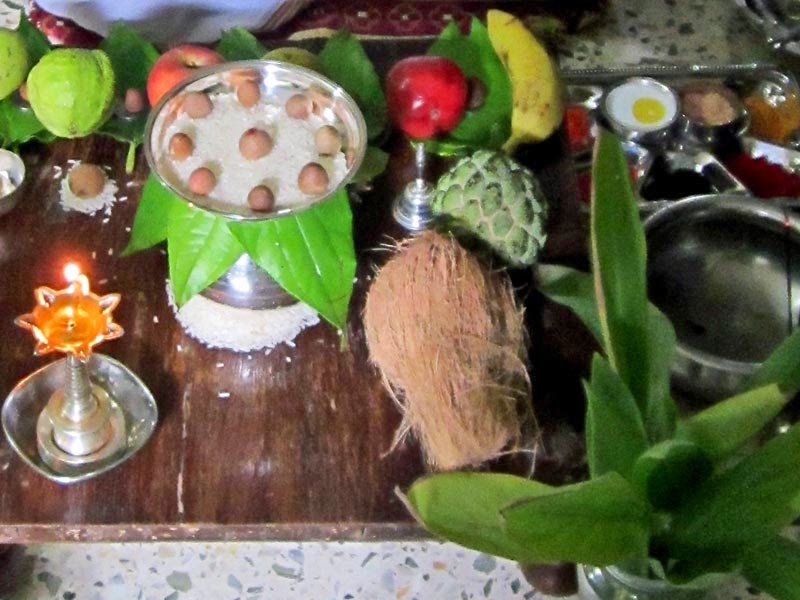
The Areca Nut is believed to be an auspicious ingredient and used in religious ceremonies in Hinduism and also in some schools of Buddhism. Here in this picture it is seen placed carefully on a mound of rice and used in a religious ceremony.

Hindu religious ritual items


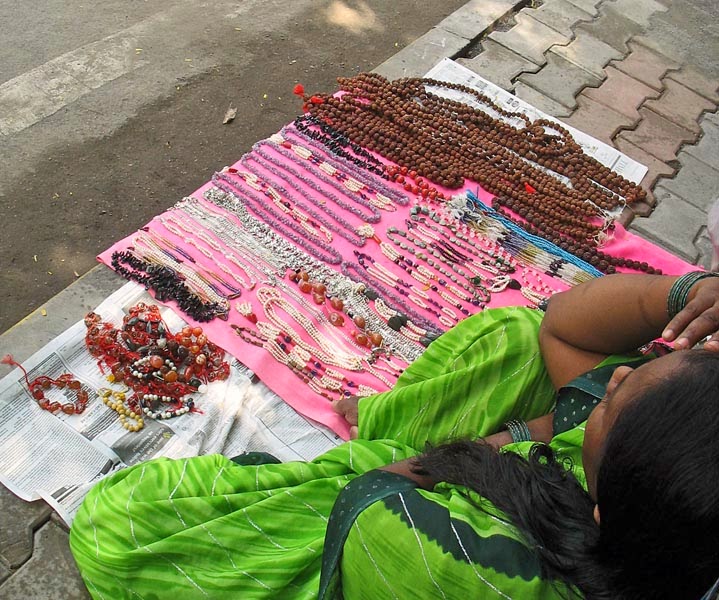
The Rudraksha is a necklace made of the beads from the seeds of the Rudraksha or Rudraksh tree, which is a large evergreen broad-leaved tree. These beads are used prayers and rituals in Hinduism and are also made into jewellery. Many fake ones are also available. The ones on the extreme right of the photograph are the rudraksha bead necklaces, the dark brown ones. These are usually available outside some temples or religious places.

Rudrakshas on sale

Or check out all the photographs filed under HinduismElloraArtCulture or Religion or Temples
More Related Images: Indian cities lit up at night with Diwali lights or  Priest performing a Pooja or Hanuman Temple


Monday, March 3, 2014

Portraits of a Gujarati tribal woman

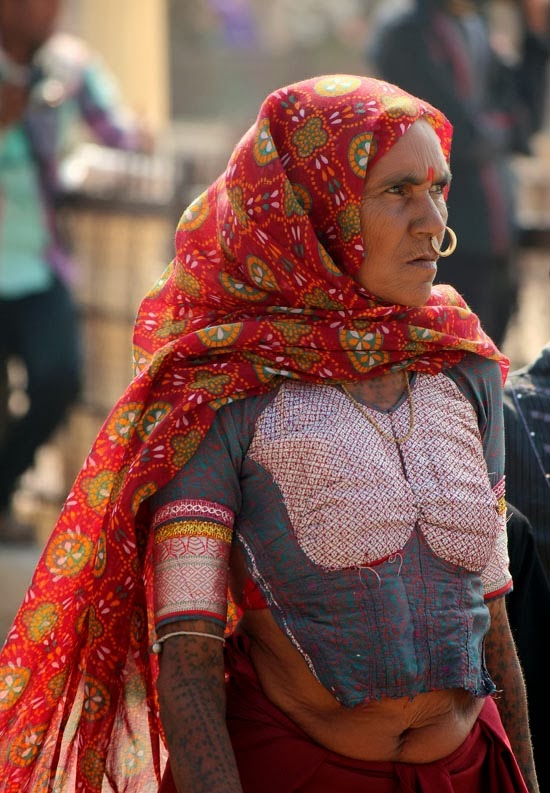
She is an elderly Indian lady, and poor. You can tell that she has had a tough life. Standing and staring. Wearing her traditional Gujarati dress she was seen on the Somnath temple grounds in Gujarat. Gujarati women wear colourful clothes as opposed to the dull whites and blues of the Gujarati men. This woman is wearing a nose ring and has a large tikka on her forehead. The bright red and green (traditional colours of Gujarati textiles) pallav is covering her head. Her arm is tattooed, common amongst tribals.

Hindu Gujarati Tribal woman


Her son is by her side. By the looks of him this woman could not be more than fifty, but looks older due to the hard life and exposure to the sun. Or is he her grandson?

Indian Tribal woman from Gujarat

You might also like pictures of Women filling water from village well in India or Tribal women in India or Rural women carrying water and firewood or Village women in Gwalior District, India
or Women in burkhas or burqas - photos or Woman Gardener in India or Mothers and children
Or photos of Young girls enjoying an ice-cream bar or Young Women Walking Silhouettes or Silhouette profile of an Indian beauty
Or check out the scores of photographs of Indian Women on this blog.


Thursday, December 19, 2013

Somnath Temple photographs

The Somnath Temple on the western coast of Gujarat, India, is one of the twelve Jyotirlinga shrines of the god Shiva. Somnath temple was destroyed many times by Islamic kings and rulers and regularly re-built. The last time was in 1947.

The unique thing about this temple is that there is no land between it and Antarctica, The fact that the ancient Indians had this knowledge is amazing. In fact much of the ancient scienctific knowledge of ancient India was lost when the Mughals burnt down a precious library at Nalanda. The barbarians were evil akin to the terrorists of today.

This is the way to enter the Somnath temple.

entry into the somnath temple


A closer look at the temple. Shoes have to removed beyond the fence. Unfortunately no cameras are allowed inside.

somnath temple

You might also like Group of temples at Mahabalipuram or Mammallapuram or Shore Temple at Mahabalipuram or Mammallapuram or Meenakshi Temple or Tiru-alavai images
Or check out all the carvings, sculptures and paintings at Ajanta or Ellora, where you will find photographs of both the Ajanta and Ellora caves and the art.
Or see the scores of images filed under the label "Temples" where you will find temples from different parts of the world, as well as sketches and silhouettes.

Monday, September 16, 2013

Arab teacher and students

This is a photograph of a person in Arab or Islamic dress, which is a long white robe called the "Thobe," teaching the Koran to three young boys also clad similarly. This ankle length robe is usually white. The young boys are wearing it too, along with a head scarf (ghutra) which is usually worn by men in the middle east. This scarf, is usually white, or checkered red/white or black/white and is tied with a black rope band. This scarf is also shemagh or kuffiyeh.

This photograph is not of real people, and was taken in a museum in Dubai. These are mannequins.

arab teacher with students

You might also like to see pictures of Women in burkhas or burqas - photos or Women in Burkhas - Silhouettes or  or Silhouettes of Mosques or Young Muslim boys


Thursday, September 12, 2013

Ancient Middle Eastern Jewellery

Ancient Middle Eastern Jewellery in the Dubai Museum. Intricate and heavy. The first photograph is of heavy bracelets and necklaces, often worn in ancient times. They are made of silver.

Ancient Arabic necklace and bracelet


The rounded piece of heavy silver jewellery so intricately carved is an anklet. The one below that is a hair decoration.

Ancient Arabic hair decoration and carved silver anklet


A heavy necklace made of large silver coins, and red and silver beads.

Ancient Arabic heavy silver necklace

More pictures: Tourists buying jewellery in Istanbul, Turkey or Costume jewellery beads and necklaces sold in Mumbai or tribal Women's earrings in Maharashtra.
Or check out all the photographs on this blog about Dubai.


Monday, July 8, 2013

Interiors of the Sardar Purandare Wada at Saswad

Here are some photographs of the interior of the Purandare Wada at Saswad. This is an extension of two previous posts - Inside the Sardar Purandare Wada at Saswad and the some exterior images of the Sardar Purandare Wada at Saswad. Saswad is a small historical town near Pune. It has other cultural sites like ancient temples besides this fortress belonging to the Purandare family. Wada is the Marathi name for a large house with a courtyard. Typically, wadas are large and sprawling houses.

This photo was taken right at the entrance, before one enters the courtyard. It is that large area between the outside and the inside. Deliberately kept this way, for safety's sake. Everything is made of stone.

corridor entry to the Purandare wada

Here is a view of the Purandare wada from the inside. It is taken from a first floor window and is a view of the courtyard and the rooms of the upper floors. The walls have since crumbled but as this was how it was built (with rooms on all four sides) one can image the number of rooms and the people who resided here.


courtyard inside the Purandare wada


A closer look at some of the wood pillars, wooden ceiling and the carved wooden decorations adorning the wada.

the rooms at the Purandare wada


A glimpse of some of the ruins inside.

Purandare wada ruins

A narrow staircase inside the wada.
narrow staircase inside the purandare wada

You might also like to see photos photos of Ancient Doors in India or more ancient culture from Maharashtra: Vishram Bag Wada Pune - Photos or Ancient Narsimha Temple in Pune

-->
-->

Thursday, June 27, 2013

Inside the Sardar Purandare Wada at Saswad

These are a few pictures of the Sardar Purandare Wada (which is a large house with a courtyard), and is a continuation of the previous post with pictures of the exterior of the Sardar Purandare Wada at Saswad. Saswad, near Pune, is a small historical town. It has some ancient temples, and also has this huge Purandare residence, which is more like a fortress!

These are some photographs of the interior. The first image is a close up of a small trap-door, which is at the bottom of a very high spiked door at the entrance to the wada. It was my ancestor, Ambaji Purandare, a Diwan of the Peshwas who owned this wada and built it with the help of the Peshwas, possibly in 1710.
Opening the huge iron doors is not practical today, and the way to enter is through this small trapdoor. You enter into a fairly large corridor inside with a very high ceiling which is a buffer between the door and the actual wada. At one time, there were doors on both the sides. A way to trap invaders if they did break into the main door.

ancient trapdoor of Sardar Purandare Wada in Saswad


Walk a little further ahead and you enter open space, and another door which leads you into another corridor. This is the entry to the main house. Carvings still decorate this wooden door.

carved entrance to the Sardar Purandare Wada at Saswad


Once you enter and look to the right, you can see the dilapidated rooms. Huge corridors line the rooms. The structure is still standing and it is possible to climb up three floors and explore the inside.

interior of the Sardar Purandare Wada at Saswad

The other side of this structure lies in ruins.
ruins of the Sardar Purandare Wada at Saswad

You might also like to see photos of the exterior of the Sardar Purandare Wada at Saswad or more photos of the inside of this old historical fort:  Interiors of the Sardar Purandare Wada at Saswad
Or photos of Ancient Doors in India or more ancient culture from Maharashtra: Vishram Bag Wada Pune - Photos or Ancient Narsimha Temple in Pune

-->
-->